
Dongguan taiyi precision machinery co., ltd

Service hotline:
+86 137 1233 7064

English
中文


Experience Sharing in EDM of Spark Machine —— How to Determine the Scale of Electrode
Author:Dongguan taiyi precision machinery co., ltd
Click:
Time:2024-01-23 11:27:43
The main factors to be considered in determining the electrode scaling are machining shape, machining size, machining allowance, machining accuracy requirements, machining surface roughness requirements, electrode and workpiece materials.
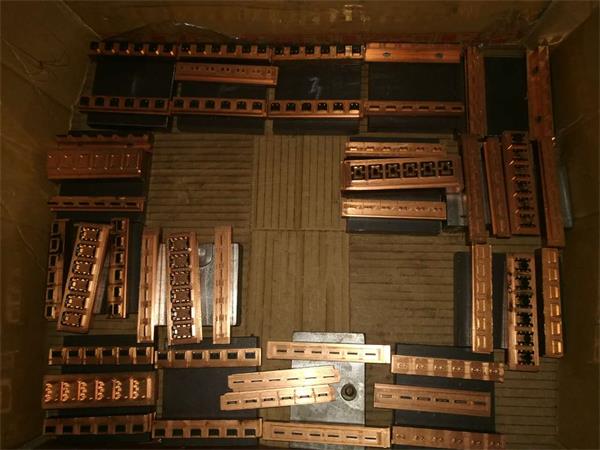
1 CNC EDM coarse, medium and fine machining electrode unilateral scaling generally take 0.30mm, 0.15mm, 0.1 mm..
2 In the case of EDM with small machining area, the electrode scaling should be smaller; In EDM with large machining area, the electrode scaling should be larger.
3 In the case of EDM with large depth, the electrode scaling should be larger to avoid the low rough machining efficiency and the out-of-tolerance of the mouth size of the station caused by secondary discharge.
When the workpiece is made of cemented carbide, the discharge gap in actual machining is only about half that of the steel workpiece, so the electrode scaling is also smaller.
5. The electrode scaling determines the machining speed to a great extent. If the discharge energy is large, the discharge gap will be large; On the contrary, on the contrary. The higher the discharge energy, the faster the machining speed. If the electrode scaling increases, the machining speed will be doubled.
Dongguan taiyi precision machinery co., ltd

Contact person:
Mr. Luo (general manager of sales department)
Mobile phone:
+86 13712337064
Address:
Floor 69, Changming Street, Fushan Village, Chabu Town, Dongguan City, China.
Fast navigation
Product classification
Contact person:Mr. Luo (general manager of sales department)
Mobile phone:+86 13712337064
Address:Floor 69, Changming Street, Fushan Village, Chabu Town, Dongguan City, China.
Dongguan taiyi precision machinery co., ltd all rights reserved. Website management
